
 Speaker

Dr Rajeev Sooreea
Biography
<h3>Keynote Address:</h3>
<h4> Challenges facing U.S. Colleges and Universities: Survival Lessons for Higher Education Leaders</h4>
American higher education is facing a deep crisis. In particular, small and medium-sized, private U.S. colleges and universities are being the most seriously impacted. More than 500 private colleges and universities have closed in the past decade. This crisis is caused by both internal factors and external conditions. What are these challenges and what strategies can be employed to ensure the long-term financial sustainability of colleges and universities in a globally competitive environment? Why, and how, should higher education leaders engage in those strategies? What survival lessons are there for higher education leaders to learn from? This presentation will showcase research that attempts to answer these questions and demonstrate that not only university administrators but also faculty members have a crucial role to play to ensure the economic sustainability of their higher education institutions.
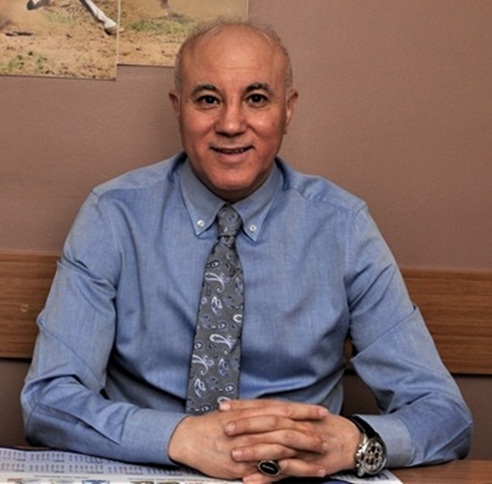
Professor Dr. Mustafa Zülküf Altan
Biography
<h3>Keynote Address:</h3>
<h4>SAVING TEACHING FROM AI OVERLOAD: Transforming University Learning for an Age of Generative AI.</h4>
We have already entered a moment in the history of education when a machine can write an essay, solve a problem, generate code, summarize a book, and produce an answer before a student has even had time to struggle with the question. The promise is enormous. So is the challenge. The question facing universities is no longer simply how to teach in the age of artificial intelligence rather, it is what is worth teaching when machines can do so much of the work for us?
This keynote argues that the greatest threat of AI to higher education is not technological replacement, but the gradual replacement of learning with convenience. If we are not careful, students may become increasingly skilled at producing answers while becoming less experienced in the difficult human work of thinking, questioning, creating, judging, listening, and taking responsibility.
Universities therefore need more than AI policies. They need a renewed educational purpose. Teaching must move beyond content delivery toward the cultivation of human capabilities that cannot simply be outsourced: judgement, curiosity, dialogue, disciplinary reasoning, practical wisdom, intellectual identity, and ethical responsibility. Assessment, too, must be redesigned to reveal how students think, make decisions, revise ideas, and perform in authentic contexts and not merely what an AI system can help them produce.
This is not a call for a university without AI. It is a call for a university with a stronger human center: one where students learn when to use intelligent machines, when to question them, and when to put them aside and think for themselves.
AI can change the tools of education but it must not decide its purpose.
Email: altanmz@erciyes.edu.tr